The Silent Threat in Your Cleaning Cabinet
Every day, millions of cat owners unknowingly expose their beloved pets to potentially lethal chemicals hiding in plain sight. A groundbreaking Brazilian study published in a leading veterinary journal has revealed an alarming truth: biosurfactants found in modern household cleaning products are causing more acute poisoning cases in domestic cats than traditional toxins.
If you're a cat owner who uses conventional cleaning products, this article could save your pet's life. Let's dive deep into what scientists have discovered and how you can truly protect your feline companion.
Understanding Biosurfactants: The Hidden Killers
Biosurfactants are compounds that reduce surface tension in water - essentially, they help soaps and detergents penetrate and remove dirt more effectively. These substances are ubiquitous in modern cleaning products, from dish detergents to floor cleaners to bathroom sanitizers.
The problem lies in cats' unique physiology. Unlike humans, feline liver metabolism cannot efficiently process many chemical compounds that are harmless to us. Biosurfactants accumulate in cats' systems and can cause:
Acute hepatic damage
Neurological symptoms
Respiratory distress
Gastrointestinal complications
In severe cases, death
According to the Brazilian study analyzing 543 cases of cat poisoning, pesticides and household cleaning supplies were the leading cause of feline toxicity, with organophosphorus compounds and biosurfactants dominating the statistics.
The Science: Alarming Numbers You Need to Know
The research revealed disturbing trends in domestic cat poisoning patterns:
Most Common Toxic Agents:
Pesticides and household cleaning supplies (containing organophosphorus compounds): 45% of cases
Human medications (acetaminophen): 23% of cases
Plants and plant derivatives (lilies): 18% of cases
Veterinary drugs: 14% of cases
Clinical Signs of Biosurfactant Poisoning:
Vomiting and diarrhea (89% of cases)
Lethargy and weakness (67% of cases)
Neurological symptoms - tremors, seizures (45% of cases)
Respiratory difficulties (34% of cases)
Hypothermia (28% of cases)
Most critically, the mortality rate for biosurfactant poisoning stands at 23%, significantly higher than traditional toxins.
Research on lipopeptide biosurfactants from Bacillus species shows these compounds have broad biological activities, including antimicrobial and immunosuppressant properties - effects that can be devastating when cats are exposed to them inadvertently.
How Cats Get Poisoned: The Perfect Storm
Cats are uniquely vulnerable to chemical toxicity due to several factors:
1. Grooming Behavior Cats spend 30-50% of their waking hours grooming. When they contact cleaning products, they ingest toxins directly by licking contaminated fur.
2. Enzyme Deficiencies Cats lack essential enzymes needed for detoxification. They have low glucuronyl transferase activity, preventing efficient metabolism of many compounds.
3. Curiosity and Investigation Cats explore new scents and may attempt to taste cleaning products.
4. Concentrated Formulations Modern cleaning products are highly concentrated - even small amounts can be toxic.
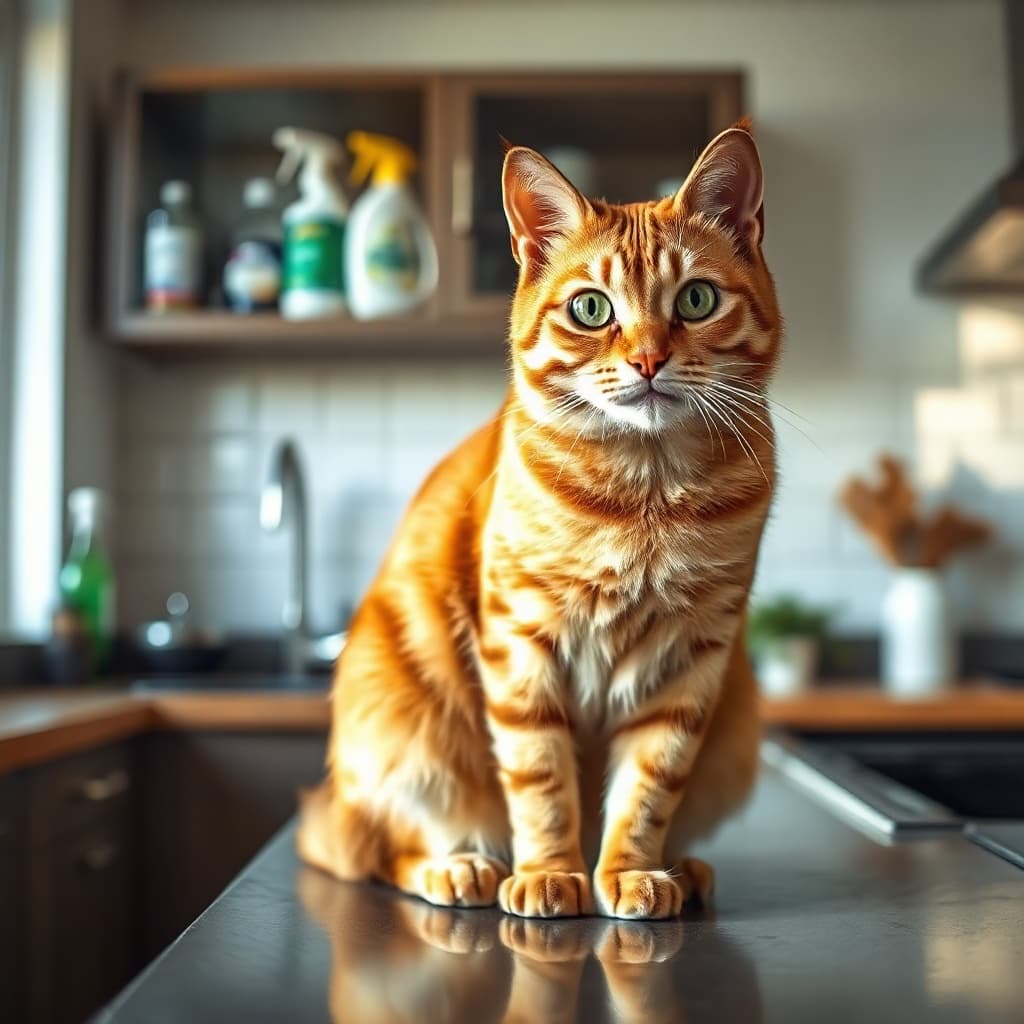
5. Secondary Exposure Cats can be poisoned by walking on freshly cleaned surfaces and then grooming their paws.
Evidence-Based Protection Strategies
Safe Household Cleaning Alternatives
Cat-Friendly Cleaning Solutions:
White vinegar (diluted 1:1 with water) for general cleaning
Baking soda for scrubbing and deodorizing
Castile soap without added fragrances
Pet-safe enzymatic cleaners
Steam cleaning (uses only water)
Safety Protocols:
Always isolate cats during cleaning sessions
Wait minimum 30 minutes before allowing cat access
Store all cleaning products in locked cabinets
Never leave open containers unattended
Read labels for organophosphate and surfactant content
Emergency Response: First Aid Protocols
Immediate Actions:
Remove cat from contamination source
If fur is contaminated, rinse with lukewarm water (no soap!)
DO NOT induce vomiting
Collect toxin sample if possible
Contact veterinarian immediately
Never Use:
Milk (has no detoxification properties)
Salt or mustard to induce vomiting
Hydrogen peroxide without veterinary approval
Home remedies found online
Clinical Warning Signs
Seek immediate veterinary care for these symptoms:
Excessive salivation
Vomiting or diarrhea
Difficulty breathing
Lethargy or unusual behavior
Seizures or tremoring
Changes in mucous membrane color
Loss of coordination
Collapse
Current Research and Future Solutions
Ongoing research into biosurfactants continues to reveal new insights. Studies on natural biosurfactants from Bacillus bacteria show promise, but even "natural" doesn't necessarily mean cat-safe.
Investment in Safety Technology:
HEPA air purification systems
Steam cleaners for chemical-free cleaning
Microfiber cloths that clean without chemicals
UV sanitization systems
Pet-specific cleaning product lines
Long-term Prevention Strategy
Family Education about chemical dangers to cats
Gradual Transition to natural cleaning alternatives
Regular Veterinary Monitoring for early problem detection
Emergency Preparedness - maintain veterinary poison control contacts
Environmental Assessment - professional evaluation of household toxins
The Path Forward: Creating a Truly Safe Home
The rise in biosurfactant poisoning represents a growing threat that many cat owners don't recognize. While we focus on obvious dangers like antifreeze and rat poison, everyday cleaning products may pose equal or greater risks.
Key Takeaways for Cat Owners:
Modern cleaning products contain more concentrated, dangerous chemicals than ever
Prevention through education and product substitution is essential
Natural alternatives exist and are effective for most cleaning needs
Emergency preparedness can mean the difference between life and death
Building a Cat-Safe Household
Creating a truly safe environment requires systematic changes:
Audit your current products - check labels for organophosphates and surfactants
Implement transition plan - gradually replace conventional products
Establish safety protocols - develop family rules for cleaning and storage
Maintain emergency readiness - know your veterinarian's after-hours contact information
Remember, your cat depends on you to create a safe environment. With proper knowledge and precautions, you can protect your feline companion from the hidden dangers lurking in household cleaning products.
The science is clear: biosurfactants pose a real and growing threat to feline health. By taking action now, you're not just cleaning your home - you're potentially saving your cat's life.
Reference: Jardim, M.P.B., Farias, L., Cid, G.C. et al. (2021). Poisoning in domestic cats in Brazil: toxicants, clinical signs, and therapeutic approaches. Arquivo Brasileiro de Medicina Veterinária e Zootecnia, 73(4). https://doi.org/10.1590/1678-4162-11856