The Greatest Cat Myth of All Time
How many times have you heard someone say cats are lazy? This stereotype has persisted for decades - the image of a cat lounging on the couch all day, occasionally stretching toward their food bowl. But what if this is one of the biggest misconceptions about our feline companions?
Modern science is finally revealing the truth about how active cats really are. And the results might surprise you!
What Science Says About Feline Activity
Scientific studies using advanced technologies like accelerometry (movement measurement) are revealing fascinating facts about cats' daily routines. Researchers have monitored domestic cats 24/7 using specialized sensors and telemetric technologies, painting a completely different picture than the "lazy cat" stereotype.
Daily Rhythms and Activity Patterns
A groundbreaking study published in Animal Biotelemetry monitored 14 cats continuously and discovered something remarkable: cats have clearly defined daily activity rhythms. Contrary to popular belief, their activity isn't random at all!
Cats exhibit:
Two main activity peaks - morning and evening (crepuscular behavior)
Consistent movement patterns throughout the day
Seasonal changes in activity - most active during spring and autumn
Individual differences, but still with clear patterns
Functional Data Analysis Reveals Hidden Truths
Researchers from PLoS ONE used functional data analysis to track cat activity and found that traditional measurement methods (simple averages) miss crucial information about behavioral patterns. When they looked deeper, they discovered complex activity patterns previously invisible to researchers.
Cats actually:
Have specific time windows of high activity
Adapt their activity to lighting conditions
Display different types of movement at different times of day
Show sophisticated behavioral orchestration
Why Did the "Lazy Cat" Myth Develop?
1. Sleep Requirements vs. Actual Activity
Cats do sleep 12-16 hours per day, but this doesn't mean they're inactive! Their sleep is different from ours - it consists of series of short naps interspersed with periods of wakefulness and activity.
2. Nocturnal Activity
A significant portion of cat activity occurs while we're sleeping. Cats are naturally crepuscular (most active at dawn and dusk), so we often miss their peak activity periods.
3. Discrete Behavior
Cats are silent hunters - their movements are subtle and unobtrusive. What appears to us as lounging might actually be alert environmental monitoring and strategic positioning.
Seasonal Variations in Feline Activity
One of the most fascinating discoveries relates to seasonal activity changes. A study published in the Journal of Veterinary Behavior tracked cats through all four seasons and found:
Spring and Autumn: Highest levels of daily activity
Winter and Summer: Lower but still consistent patterns
Light conditions: Fundamentally influence activity timing
Natural rhythms: Persist even in indoor environments
Evidence-Based Tips for Cat Owners
1. Respect Natural Rhythms
Don't expect daytime activity - cats have their own "business hours"
Evening play sessions are crucial for feline satisfaction
If your cat is "acting up" in the evening, that's completely natural!
2. Create Stimulating Environments
Vertical spaces - shelves, cat trees, climbing opportunities
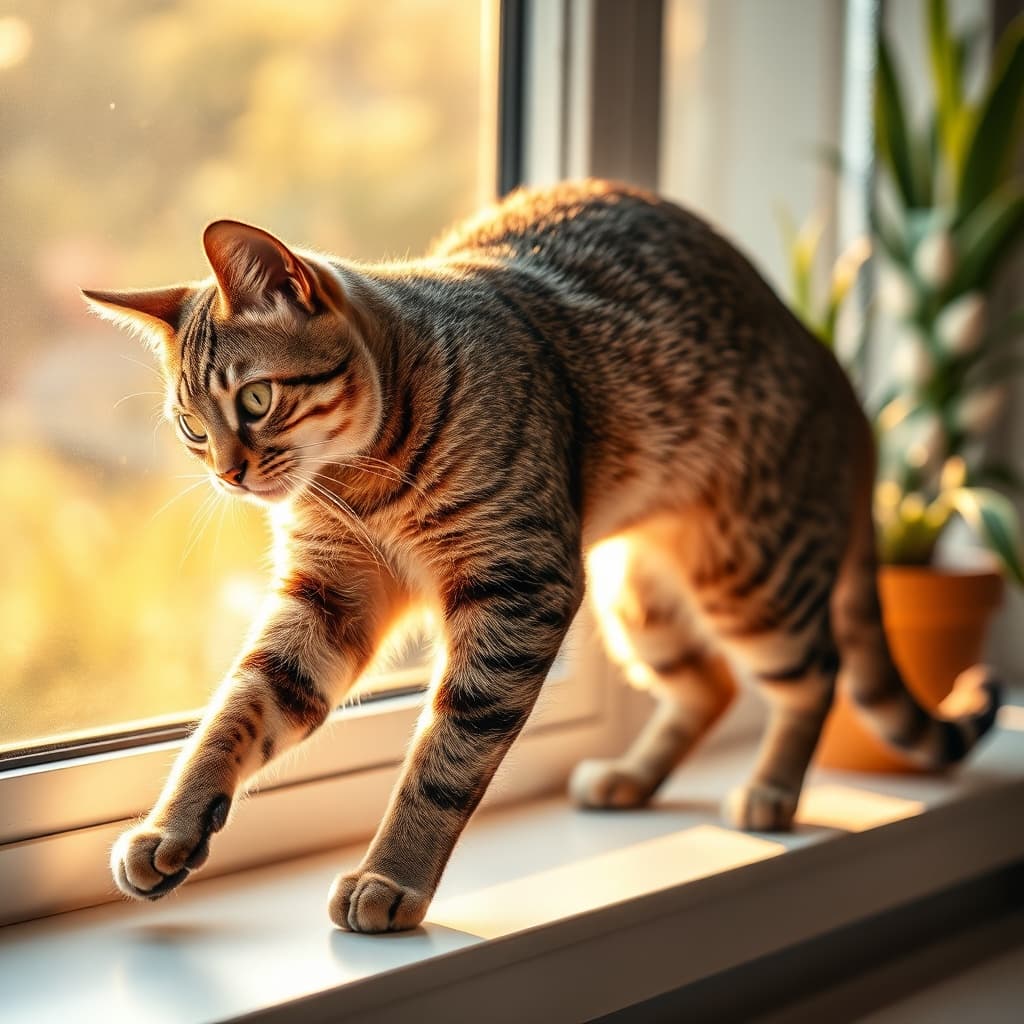
Window views - for environmental observation and mental stimulation
Interactive toys - especially during peak activity hours
Rotation of stimuli - keep the environment fresh and engaging
3. Monitor Individual Patterns
Every cat is unique in their activity patterns
Learn your cat's "active hours"
Adapt feeding and play schedules to these natural rhythms
Document changes - they can indicate health issues
4. Watch for Activity Changes
Sudden changes in activity may signal health problems
Older cats may have reduced but still regular activity patterns
Consult a veterinarian if you notice significant behavioral shifts
Understanding Your Cat's True Nature
Understanding the real nature of feline activity can dramatically improve your cat's quality of life. Instead of fighting against their natural instincts, learn to work with them.
Remember: A cat that seems "lazy" during the day may actually be perfectly healthy and active according to their natural biorhythms. What we interpret as laziness is often energy conservation between periods of intense activity.
The Evolutionary Perspective
Cats evolved as ambush predators - animals that need to conserve energy for short bursts of intense activity. This evolutionary heritage explains their:
Efficient energy management
Strategic rest periods
Explosive activity capabilities
Alert resting states
Implications for Cat Welfare
This research has significant implications for cat care:
Environmental enrichment should match natural activity patterns
Veterinary assessments should consider individual activity baselines
Behavioral problems might stem from misaligned human expectations
Senior cat care should account for changing but still present activity needs
Conclusion: Cats Are Far From Lazy!
Science clearly demonstrates that cats have complex, well-organized activity patterns. They're not lazy - they're highly efficient animals with sophisticated daily rhythms developed over thousands of years of evolution.
Next time someone claims cats are lazy, you can share the fascinating scientific evidence that proves otherwise. Your cat isn't a couch potato - they're a sophisticated predator with complex behavioral patterns perfectly adapted to their ecological niche.
Understanding and respecting these natural patterns isn't just scientifically interesting - it's the key to providing better care for our feline companions and building stronger human-cat relationships based on evidence rather than myths.
Scientific Reference: Gruen, M. E., Alfaro‐Córdoba, M., Thomson, A., et al. (2017). The Use of Functional Data Analysis to Evaluate Activity in a Spontaneous Model of Degenerative Joint Disease Associated Pain in Cats. PLoS ONE, 12(1), e0169576. https://doi.org/10.1371/journal.pone.0169576