Safe Natural Disinfectants for Cat-Friendly Households
As a cat owner, you've probably wondered whether your cleaning products are truly safe for your feline companion. Cats are uniquely vulnerable to chemical toxins due to their limited liver enzyme capacity for metabolizing many substances. Fortunately, science offers compelling solutions in the form of natural disinfectants that are both effective and safe.
Why Natural Disinfectants Matter for Cat Health
Cats spend 30-50% of their waking hours grooming themselves, meaning anything that gets on their paws or fur can end up in their mouths. Many commercial disinfectants contain phenols, quaternary ammonium compounds, or chlorine that can cause serious health issues in cats:
Respiratory irritation and difficulty breathing
Gastrointestinal upset and vomiting
Contact dermatitis and skin burns
Liver damage in severe cases
Central nervous system depression
This is where natural alternatives become not just preferable, but essential for responsible cat ownership.
Scientific Breakthroughs in Natural Disinfection
According to groundbreaking research published in the Journal of Feline Medicine and Surgery, veterinary practices are increasingly adopting innovative disinfection methods. The study highlights the promising use of ultraviolet radiation and silver compounds as effective antimicrobial agents that could revolutionize how we approach home hygiene.
UV-C Radiation: Nature's Sterilizer
Ultraviolet-C radiation (UV-C) works by damaging the DNA and RNA of microorganisms, effectively neutralizing bacteria, viruses, and fungi without chemical residues. For home use, portable UV-C devices can be used to:
Sanitize litter boxes between cleanings
Disinfect cat toys and accessories
Sterilize air in small spaces
Clean feeding bowls without water
Safety Note: UV-C devices must never be used in the presence of cats or humans, as the radiation can damage eyes and skin.
Silver: The Ancient Antimicrobial
Silver ions have been used medicinally for millennia, and modern science confirms their remarkable antimicrobial properties. Silver-based solutions offer several advantages:
Broad-spectrum antimicrobial activity
Long-lasting residual protection
No toxic fumes or residues
Safe if accidentally ingested in small amounts
Colloidal silver solutions or silver-infused cleaning cloths can be particularly effective for routine surface cleaning.
Evidence-Based Natural Alternatives
Bacillus-Derived Biosurfactants
Research published in the Journal of Food Quality reveals that lipopeptide biosurfactants produced by Bacillus bacteria demonstrate significant antimicrobial properties. These naturally occurring compounds can be found in:
Specialized eco-friendly cleaning products
Probiotic cleaning solutions
Enzyme-based cleaners
These biosurfactants not only clean but also create a protective biofilm that continues working long after application.
Honey: Nature's Antimicrobial Powerhouse
Honey contains hydrogen peroxide, flavonoids, and maintains a low pH that creates an inhospitable environment for pathogens. Clinical research demonstrates honey's effectiveness against both gram-positive and gram-negative bacteria.
For home use, create a gentle disinfectant solution:
1 teaspoon raw honey
1 cup warm water
1 teaspoon white vinegar
This solution is completely safe if your cat accidentally ingests it.
Practical Implementation Strategies
Daily Cleaning Protocol
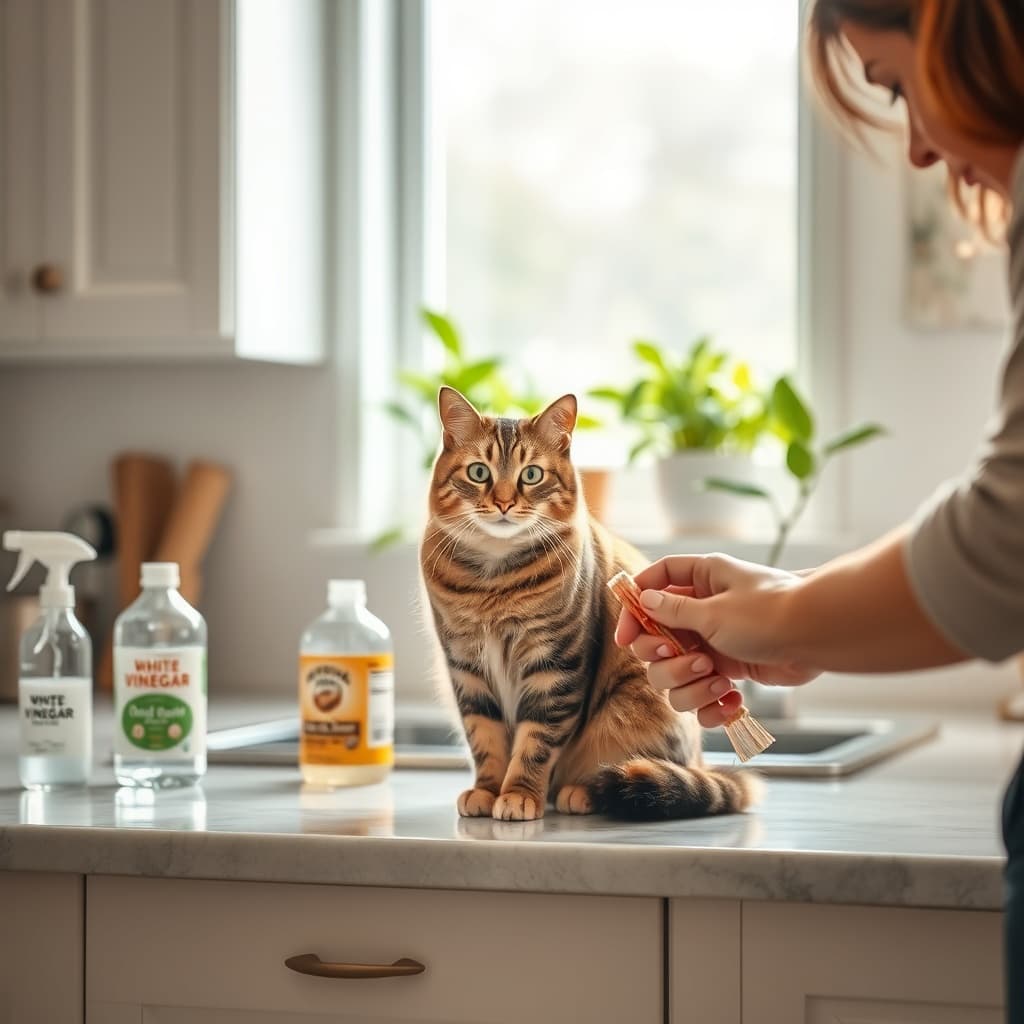
White Vinegar Solution: Mix equal parts white vinegar and water. The acetic acid effectively kills bacteria, mold, and many viruses while being completely cat-safe.
Steam Cleaning: Steam at 212°F (100°C) kills virtually all pathogens through heat alone, leaving no chemical residues.
Microfiber Technology: High-quality microfiber cloths can mechanically remove up to 99% of bacteria without any cleaning products.
Specialized Cat Area Maintenance
Litter Box Management:
Daily waste removal is crucial
Weekly deep clean with hot water and baking soda
Monthly UV-C sterilization (when cats are not present)
Avoid scented products that can overwhelm cats' sensitive noses
Food and Water Stations:
Wash bowls daily in hot, soapy water (160°F minimum)
Use stainless steel or ceramic bowls (plastic harbors bacteria)
Place feeding mats that can be machine-washed weekly
Sleeping Areas:
Wash bedding weekly in hot water (140°F minimum)
Add white vinegar to rinse cycle instead of fabric softener
Sun-dry when possible for natural UV disinfection
Advanced Natural Disinfection Methods
Hydrogen Peroxide Systems
Food-grade hydrogen peroxide (3% solution) breaks down into water and oxygen, making it completely safe. It's particularly effective against:
Parvovirus and calicivirus
Salmonella and E. coli
Ringworm spores
Essential Oil Alternatives (Cat-Safe Options)
While many essential oils are toxic to cats, some can be used safely in very dilute concentrations:
Lemon (citrus limon): Natural antimicrobial, use sparingly
Lavender: Only true lavender (Lavandula angustifolia) in minimal amounts
Warning: Never use tea tree, peppermint, eucalyptus, or pine oils around cats.
What to Avoid Completely
Certain ingredients should never be used in cat households:
Phenol-based products (Lysol, Pine-Sol)
Quaternary ammonium compounds
Chlorine bleach
Ammonia-based cleaners
Most essential oils
Fabric softeners and air fresheners
The Science of Safe Cleaning
Research consistently shows that the most effective cleaning approach combines multiple methods:
Physical removal of debris and organic matter
Heat treatment when possible
Natural antimicrobial agents for residual protection
Proper ventilation to prevent buildup of any compounds
Conclusion: Evidence-Based Cat Care
Natural disinfectants represent a scientifically sound approach to maintaining a hygienic home while protecting your cat's health. The combination of UV technology, silver compounds, biosurfactants, and traditional methods like vinegar and steam creates a comprehensive cleaning strategy that doesn't compromise on effectiveness.
Remember: consistency matters more than intensity. Regular gentle cleaning with safe products is far superior to occasional harsh chemical treatments.
By choosing natural alternatives, you're not just following a trend—you're making an evidence-based decision that prioritizes your cat's long-term health while maintaining the cleanliness standards your family deserves.
Reference: Addie, D., et al. (2015). Disinfectant choices in veterinary practices, shelters and households. Journal of Feline Medicine and Surgery. PubMed: https://pubmed.ncbi.nlm.nih.gov/26101311/