The Cat That Broke All the Rules
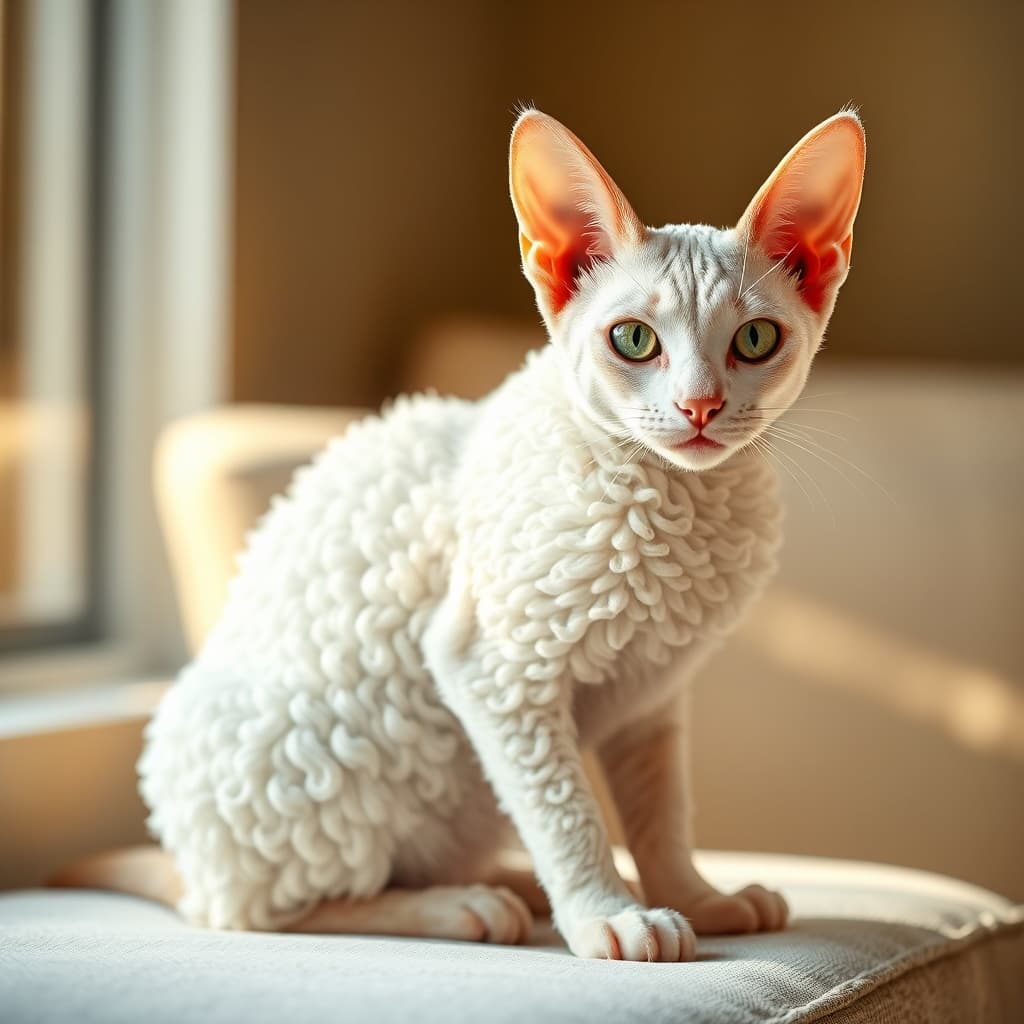
Imagine encountering a cat with tight curls like a lamb, an elegant greyhound-like body, and the playful spirit of an eternal kitten. This is the Cornish Rex – one of the most genetically fascinating cat breeds in the world. For decades, the mystery behind their distinctive wavy coat puzzled both breeders and scientists alike. Now, cutting-edge genetic research has finally unraveled this feline enigma.
The Genetic Mystery Solved
For years, the exact mechanism behind the Cornish Rex's characteristic curly coat remained elusive. Breeders knew it was inherited, but the precise genetic cause was unknown. A groundbreaking study published in PLoS One by researchers at the University of California, Davis, has revolutionized our understanding of this unique breed.
Using advanced genomic techniques, scientists analyzed DNA samples from Cornish Rex cats and made a remarkable discovery: a mutation in the KRT71 gene (keratin 71) is directly responsible for the breed's signature curly coat. This gene codes for keratin, a crucial structural protein that forms the building blocks of hair follicles.
The Science of Curly Cat Hair
Under a microscope, normal cat hair appears straight and uniformly structured. However, in Cornish Rex cats, the story is completely different. The KRT71 gene mutation disrupts proper keratin fiber formation, resulting in:
Altered hair shaft structure that curves as it grows
Reduced hair diameter creating a finer texture
Characteristic wave patterns throughout the coat
Modified follicle architecture affecting hair emergence
What makes this particularly interesting is that the mutation follows a recessive inheritance pattern. This means a cat must inherit the mutated gene from both parents to express the curly coat phenotype.
A Breed Born from One Special Cat
The Cornish Rex breed has a remarkably focused origin story that perfectly aligns with the genetic findings. In 1950, on a farm in Cornwall, England, Nina Ennismore discovered an unusual kitten with a curly coat among a litter of normal-coated cats. She named him Kallibunker and decided to establish a breeding program.
The genetic research revealed something extraordinary: all modern Cornish Rex cats trace back to this single mutation event! The study identified what scientists call a "signature of recent selective sweep" – evidence of how rapidly this specific mutation spread through the population due to intentional breeding practices.
This finding demonstrates how artificial selection can amplify rare genetic variants, creating entirely new breed characteristics within just a few generations.
Health Implications and Considerations
While the curly coat is undeniably beautiful, it comes with specific health and care considerations that owners should understand. Research into genetic diversity and health outcomes in pedigreed cats reveals important insights for Cornish Rex owners.
Advantages of the Curly Coat:
Reduced shedding compared to traditional cat breeds
Potentially hypoallergenic properties for some sensitive individuals
Lower maintenance grooming requirements
Unique texture that many find appealing
Health Considerations:
Temperature sensitivity due to reduced insulation
Increased susceptibility to sunburn on exposed skin
Potential skin sensitivity requiring gentle care products
Higher metabolic needs to maintain body temperature
Evidence-Based Care Guidelines
Based on scientific understanding of the breed's genetic makeup and physiological needs, here are research-informed care recommendations:
Coat and Skin Care
Gentle handling is essential – avoid aggressive brushing
Regular but mild bathing helps remove excess oils
Use pH-balanced, gentle shampoos designed for sensitive skin
Pat dry rather than rubbing to prevent hair breakage
Environmental Management
Provide warm resting areas throughout the home
Consider protective clothing during colder months
Limit direct sun exposure to prevent skin damage
Maintain consistent indoor temperatures for comfort
Nutritional Support
High-quality protein sources support healthy coat development
Omega-3 fatty acid supplementation may benefit skin health
Monitor body weight as metabolism may be elevated
Ensure adequate caloric intake especially in cooler environments
The Future of Feline Genetics
The identification of the KRT71 mutation represents just the beginning of our genetic understanding of cat breeds. Current research trends indicate exciting developments ahead:
Genetic Testing Applications
Commercial tests now available to identify KRT71 mutation carriers
Breeding program optimization through genetic screening
Health risk assessment becoming more sophisticated
Personalized veterinary care based on genetic profiles
Research Implications
Studies involving over 11,000 domestic cats have revealed that genetic testing is effectively reducing disease-associated variants in pedigreed populations. This suggests a bright future for breed health improvement through scientific understanding.
Broader Scientific Context
The Cornish Rex story exemplifies broader principles in genetics and evolutionary biology. The breed demonstrates how:
Single gene mutations can create dramatic phenotypic changes
Founder effects shape entire breed populations
Artificial selection accelerates genetic change
Modern genomics can solve historical mysteries
This research contributes to our understanding of mammalian coat genetics and has implications beyond just cats, potentially informing studies of hair disorders in humans and other animals.
Conclusion: Beauty Written in DNA
The Cornish Rex stands as a testament to the power of genetics to create something truly extraordinary. What began as a single spontaneous mutation in a Cornish farmyard has become one of the most distinctive and beloved cat breeds in the world.
Understanding the science behind their curly coat doesn't diminish the wonder of these remarkable cats – it enhances it. Every Cornish Rex carries within their DNA the story of Kallibunker and the genetic accident that created a breed like no other.
As genetic technologies continue advancing, we can expect even deeper insights into what makes each cat breed unique, ultimately leading to better health outcomes and more informed breeding practices.
This article is based on peer-reviewed research published in PLoS One: "To the Root of the Curl: A Signature of a Recent Selective Sweep Identifies a Mutation That Defines the Cornish Rex Cat Breed" (Gandolfi et al., 2013). Available at: https://pubmed.ncbi.nlm.nih.gov/23826204/