The Marvel of Multi-Toed Paws
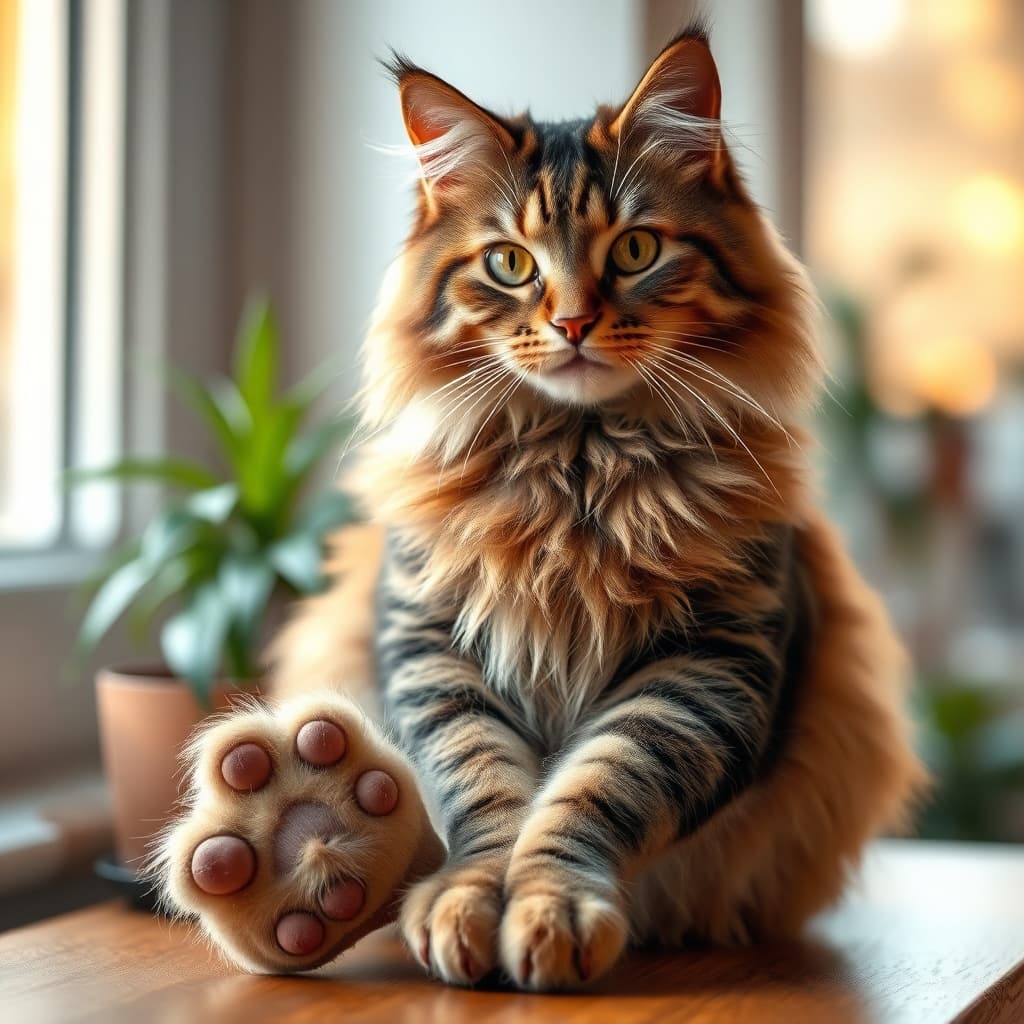
Imagine a cat that seems perfectly designed for snowy Maine winters - not just with a thick, luxurious coat, but with extra-wide paws equipped with additional toes for better traction. This isn't fiction; it's the remarkable reality of polydactyl Maine Coon cats.
These extraordinary felines carry a genetic gift that has fascinated researchers, breeders, and cat lovers for centuries. But what exactly causes some Maine Coons to develop extra toes, and why has this trait persisted through generations?
Understanding Polydactyly in Cats
Polydactyly derives from Greek words meaning "many fingers" and refers to a congenital condition where cats are born with more than the typical number of toes. While most cats have 18 toes total (five on each front paw and four on each back paw), polydactyl cats can have up to 28 toes!
In Maine Coon cats, this condition is particularly significant because:
It occurs naturally within the breed population
It has deep historical roots in the breed's development
It's genetically heritable through simple Mendelian inheritance
It causes no health problems when properly cared for
Scientific Insights into Maine Coon Polydactyly
Groundbreaking research published in the Journal of Feline Medicine and Surgery provided comprehensive insights into polydactyly in Maine Coon cats. The study examined 70 Maine Coon cats from various breeding lines across Europe, Canada, and the United States, using both physical examinations and radiographic imaging.
Key Research Findings:
Phenotypic Variability:
Polydactyly expression varies significantly between individuals
Extra toes can appear on front paws only, hind paws only, or all four paws
Front paws are most commonly affected
No two polydactyl cats have identical paw configurations
Anatomical Structure:
Extra toes possess normal bone and joint structures
Most additional digits are fully functional
Cats can use extra toes for enhanced gripping and manipulation
X-ray analysis revealed proper skeletal development
Genetic Inheritance:
Polydactyly follows an autosomal dominant inheritance pattern
Offspring have a 50% chance of inheriting the trait from one polydactyl parent
The responsible gene affects limb bud development during embryogenesis
The Evolutionary Advantage of Extra Toes
The persistence of polydactyly in Maine Coon cats isn't accidental - it represents a natural adaptation to harsh New England winters. Historical evidence suggests this trait provided several advantages:
Environmental Adaptations:
Enhanced stability on snow and ice
Improved climbing ability on rocky coastal terrain
Better prey capture in challenging conditions
Wider paw spread functioning like natural snowshoes
Modern Understanding:
Contemporary genetics reveals that polydactyly results from mutations in developmental genes that control digit formation. These mutations, far from being detrimental, can enhance survival in specific environments.
Types of Polydactyly in Cats
Scientific classification identifies three distinct types of polydactyly:
1. Preaxial Polydactyly
Extra toes develop on the thumb side of the paw
Most common type in Maine Coon cats
Additional digits are typically fully functional
Often called "mitten paws" due to their appearance
2. Postaxial Polydactyly
Extra toes appear on the outer edge of the paw
Less common in feline populations
May be associated with other developmental anomalies
3. Central Polydactyly
Additional toes develop in the middle of the paw
Rarest form of polydactyly
Often results in non-functional digits
Essential Care Guide for Polydactyl Maine Coons
Paw Care Fundamentals:
Inspect all toes regularly for signs of injury or infection
Trim claws on all digits including extra toes
Monitor for ingrown claws - extra toes may not wear down naturally
Check between toes for debris or irritation
Health Considerations:
Polydactyly is not a disease - it's a normal genetic variation
Extra toes may be more susceptible to injury
Consult veterinarians familiar with polydactyl cats
Regular check-ups ensure optimal paw health
Environmental Modifications:
Provide wider scratching posts to accommodate larger paws
Use appropriate litter that won't stick between extra toes
Cat-proof your home - extra toes can get caught in fabrics
Choose suitable toys that won't pose entanglement risks
Debunking Common Myths
❌ Misconceptions:
Polydactyly indicates genetic defects
Extra toes should be surgically removed
Polydactyl cats have health problems
The condition results from inbreeding
✅ Scientific Facts:
Polydactyly is a normal genetic variation
Extra toes are functional and beneficial
Polydactyl cats are equally healthy as typical cats
The trait occurs naturally in wild populations
Breeding Considerations and Ethics
Responsible Breeding Practices:
Genetic testing can predict polydactyly inheritance
Health screening ensures overall breed quality
Documentation helps track genetic lines
Ethical considerations prioritize cat welfare
Breed Standard Variations:
Some cat registries accept polydactyl Maine Coons
Others exclude them from show competition
Breeding goals should prioritize health over appearance
Current Research and Future Directions
Ongoing scientific investigations focus on:
Precise gene mapping for polydactyly mutations
Developmental biology of limb formation
Comparative studies across different breeds
Evolutionary advantages in various environments
The Wonder of Genetic Diversity
Polydactyl Maine Coon cats represent a fascinating example of beneficial genetic variation. Their extra toes aren't mistakes - they're evolutionary innovations that helped their ancestors thrive in challenging environments.
As our understanding of genetics advances, we gain greater appreciation for the natural wisdom embedded in these remarkable adaptations. Each polydactyl Maine Coon carries a genetic legacy spanning centuries of survival and adaptation.
For owners of these extraordinary cats, remember that you're caring for a living piece of evolutionary history. Those extra toes tell a story of adaptation, survival, and the incredible diversity of life itself.
Reference: Hamelin A, Begon D, Conchou F, et al. Clinical characterisation of polydactyly in Maine Coon cats. J Feline Med Surg. 2017. PubMed ID: 26862149