When Your Cat Plays, They're Telling You How They Feel Inside
Have you ever noticed that some days your cat seems endlessly playful, chasing every toy with boundless energy, while other days they barely lift their head when you wave their favorite feather wand? This isn't random behavior—your cat's play patterns are actually a sophisticated communication system about their inner emotional state.
Groundbreaking research published in Animal Welfare has revealed fascinating connections between play behavior and psychological wellbeing in domestic cats. For cat parents, this means that understanding your cat's play can give you unprecedented insights into their mental health.
What Science Reveals About Feline Play and Wellbeing
Researchers have discovered that play functions as both an indicator and promoter of welfare in cats. This dual role makes play behavior one of the most reliable windows into your cat's psychological state.
The research shows that cats engage in play most frequently when they feel secure and content, with their basic needs met. Play emerges as a "luxury behavior"—something cats indulge in only when they're not under threat and when immediate survival needs like food, water, and safety are satisfied.
Key Scientific Findings:
Play frequency directly correlates with overall life satisfaction
Play variety indicates cognitive health and environmental enrichment
Play absence can signal stress, illness, or depression
Play quality reflects emotional regulation and social confidence
Recognizing Healthy Play Behavior in Your Cat
Signs of a Mentally Healthy Playing Cat:
Spontaneous initiation: Your cat starts play sessions independently
Behavioral diversity: They engage in multiple play types (hunting, wrestling, chasing)
Appropriate intensity: Energetic but controlled, not frantic or aggressive
Sustained engagement: Play sessions last several minutes
Regular patterns: Consistent daily play across different times
Red Flags in Play Behavior:
Excessive aggression during play sessions
Compulsive repetition of single play behaviors
Complete play avoidance in previously active cats
Fear responses during play activities
Obsessive behaviors (like endless laser pointer chasing)
The Psychology Behind Feline Play
Play isn't just physical exercise for cats—it's a complex neurological and emotional process that promotes psychological wellbeing. During play, cats release endorphins and other neurochemicals that create feelings of satisfaction and reduce stress hormones.
For indoor cats especially, play serves as a crucial substitute for natural hunting behaviors. Research indicates that cats with adequate play opportunities show:
Reduced anxiety and depression markers
Better stress resilience
Improved social behaviors with humans and other pets
Enhanced cognitive function and problem-solving abilities
More stable sleep patterns and appetite regulation
Evidence-Based Strategies to Promote Mental Health Through Play
Creating an Optimal Play Environment:
Toy rotation system: Change available toys weekly to maintain novelty
Multi-level spaces: Provide vertical territory with cat trees and shelving
Interactive feeding: Use puzzle feeders to combine play with meals
Hiding spots: Create secure spaces where cats can observe before engaging
The Science-Backed Play Schedule:
Morning session: 10-15 minutes of active play before breakfast
Midday engagement: Brief 5-10 minute interactive sessions
Evening hunt: Longer, more intensive play before dinner
Night availability: Leave safe solo toys accessible for independent play
Types of Mentally Enriching Play:
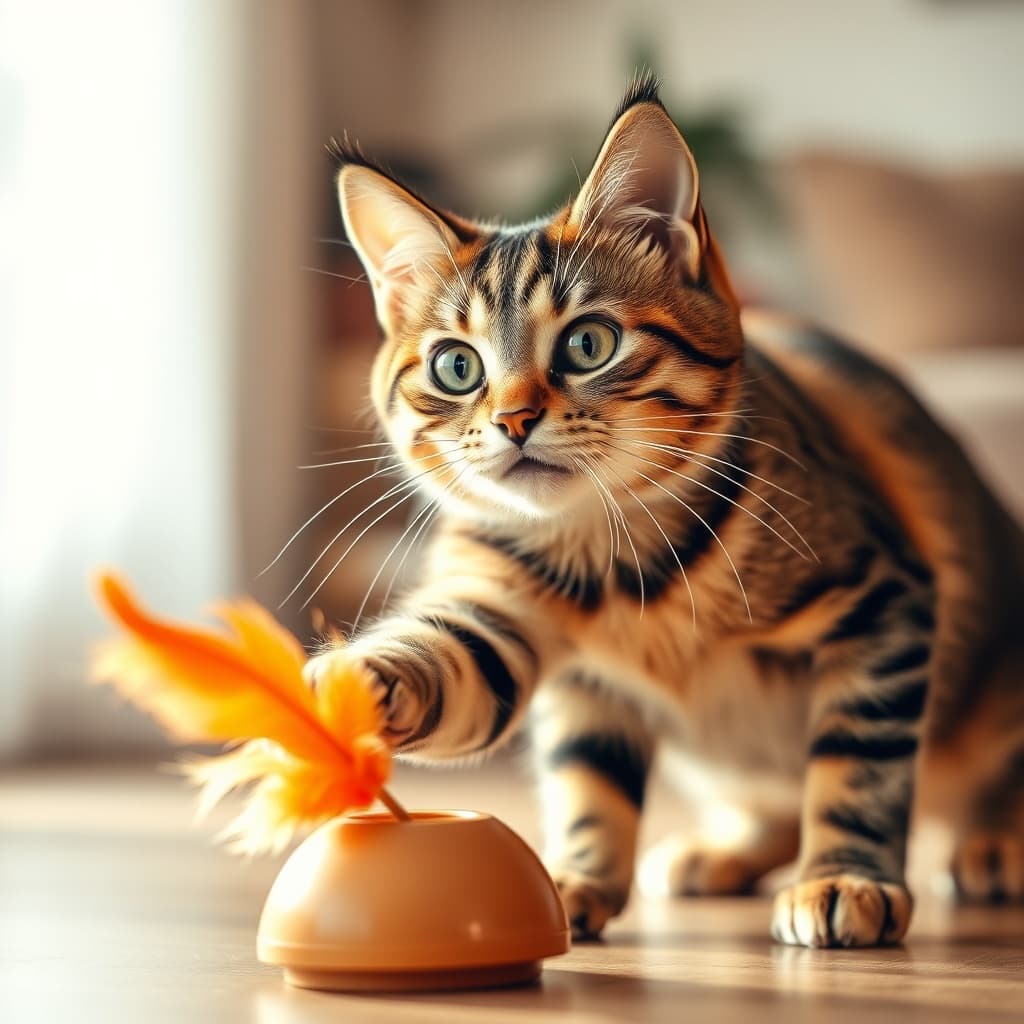
Predatory play: Feather wands, motorized mice, laser pointers (with physical catch)
Cognitive challenges: Puzzle toys, treat-dispensing balls, hide-and-seek games
Social interaction: Gentle wrestling with hands (if your cat enjoys it)
Environmental exploration: Cardboard boxes, paper bags, new spaces
Understanding Individual Play Personalities
Every cat has a unique "play personality" that reflects their individual psychology:
The Hunter: Prefers stalking and pouncing games, indicating strong predatory instincts and confidence
The Athlete: Enjoys high-energy, acrobatic play, suggesting good physical and mental health
The Thinker: Gravitates toward puzzle toys and problem-solving, showing high cognitive engagement
The Social Player: Seeks interactive play with humans, indicating secure attachment and trust
Recognizing your cat's play personality helps you provide the most psychologically satisfying experiences.
When Play Changes Signal Health Concerns
Sudden shifts in play behavior often indicate underlying issues that require attention:
Immediate veterinary consultation needed for:
Abrupt cessation of play in previously active cats
New aggressive behaviors during play
Signs of pain or discomfort during movement
Obsessive or compulsive play patterns
Extreme fearfulness around previously enjoyed activities
Gradual changes that warrant monitoring:
Decreased play duration or intensity
Reduced interest in favorite toys
Changes in play timing or preferences
Increased solitary versus interactive play
Building Long-Term Psychological Wellness Through Play
Consistent, quality play experiences create lasting positive impacts on feline mental health. Cats who receive adequate play stimulation throughout their lives show:
Greater resilience to environmental changes
Stronger human-animal bonds
Reduced behavioral problems
Better adaptation to multi-pet households
Enhanced quality of life in senior years
Conclusion: Play as the Foundation of Feline Happiness
Understanding your cat's play behavior gives you a direct line to their psychological wellbeing. Play is far more than entertainment—it's a fundamental need that shapes every aspect of your cat's mental health and life satisfaction.
By providing diverse, engaging play opportunities and paying attention to changes in play patterns, you're investing in your cat's psychological wellness in the most natural way possible. A cat whose play needs are met is a cat equipped to handle life's challenges with confidence and joy.
Remember: your cat's play is their voice. Listen to what they're telling you, respond with appropriate enrichment, and watch as your understanding of each other deepens. The result? A happier, healthier, and more connected relationship that benefits you both.
This article is based on scientific research: Henning, J., et al. (2022). Play and welfare in domestic cats: Current knowledge and future directions. Animal Welfare, 31(4). DOI: https://doi.org/10.7120/09627286.31.4.005