One of the most common questions I receive is: "Should I let my cat go outside?" Discussions on this topic can get quite heated — some owners swear by free roaming, others would never let their cat outdoors. Let's see what science has to say.
What the Numbers Say About Lifespan
The differences in lifespan are quite significant. Indoor cats typically live 12–18 years, with many living past 20. Free-roaming outdoor cats average only 2–5 years. That's a remarkable difference worth considering.
An interesting UC Davis study from 2022 analyzed over 3,100 cats and found that cats with supervised outdoor access — on a leash, in an enclosed garden, or in a catio — did not have significantly shorter lifespans than indoor-only cats. The problem is unsupervised free roaming.
Outdoor Risks
The outdoor environment poses numerous dangers for cats:
Traffic accidents — the leading cause of death in young outdoor cats
Infectious diseases — FeLV, FIV, FIP
Fights with other cats — wounds, abscesses, disease transmission
Parasites — ticks, fleas, intestinal worms
Poisoning — pesticides, antifreeze, toxic plants
Predators — dogs, foxes, and other wildlife (depending on location)
What About Mental Wellbeing?
A fascinating 2026 study by Lima et al. (DOI: 10.1080/10888705.2025.2610233) measured hair cortisol levels in cats — a reliable marker of chronic stress. The result? There was no significant difference in cortisol levels between indoor and outdoor cats (2.40 vs 2.62 pg/mg). Indoor cats with proper enrichment are not more stressed than free-roaming cats.
Safe Alternatives: The Best of Both Worlds
If you want to give your cat a taste of nature without the risks, there are several proven options:
Catio (cat patio) — an enclosed outdoor space where your cat can safely enjoy fresh air and watch birds
Harness walks — yes, cats can learn to walk on a leash with patience
Secured garden — netting systems on fences that prevent cats from escaping
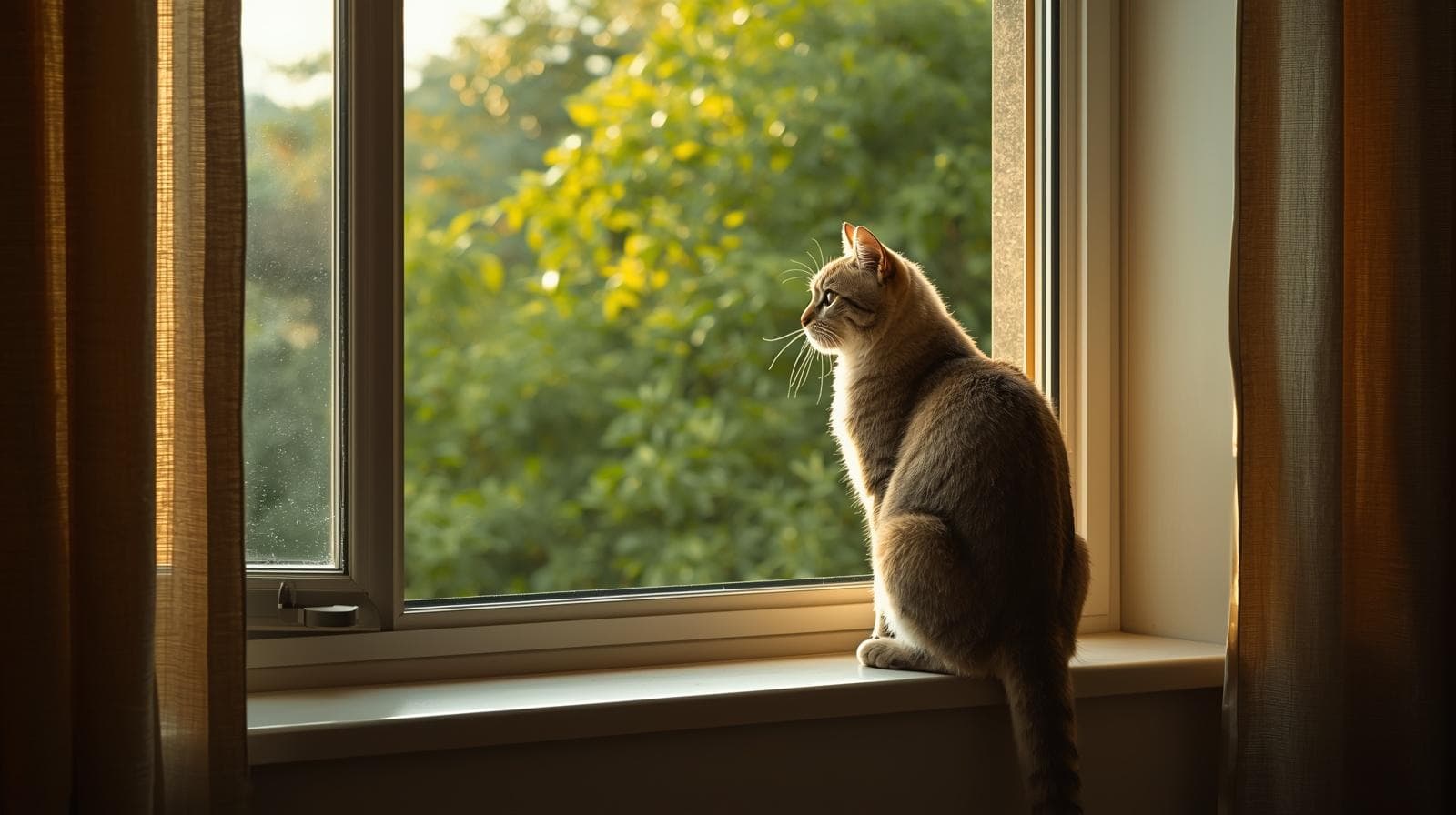
Window perches with safety nets — cats love watching the world from windows, but open windows without nets are dangerous
The 5 Pillars of a Happy Indoor Cat
According to the AAFP and ISFM Environmental Needs Guidelines (Ellis et al., J Feline Med Surg, 2013; DOI: 10.1177/1098612X13477537), there are 5 key pillars for a content cat:
A safe place — your cat needs a retreat where it can hide
Multiple resources (food, water, litter box) — separated, in quiet locations
Opportunities for play and predatory behavior — interactive toys, puzzle feeders
Positive human interaction — while always respecting the cat's boundaries
Respect for scent needs — cats communicate through scent; don't remove their markings
My Perspective
I personally believe that a cat can live a full, happy life indoors — provided we give it what it needs. A catio or secured balcony is a great bonus, but not essential. The most important things are environmental enrichment, play, and your attention.
Always consult your veterinarian about what's best for your specific cat. Every cat is different, and their needs vary based on age, health status, and temperament.
References
• UC Davis (2022). Study on cat longevity and outdoor access. • Lima KCP et al. (2026). Stress in Indoor and Outdoor Cats. JAAWS. DOI: 10.1080/10888705.2025.2610233 • Ellis SLH et al. (2013). AAFP and ISFM feline environmental needs guidelines. J Feline Med Surg, 15(3):219-30. DOI: 10.1177/1098612X13477537