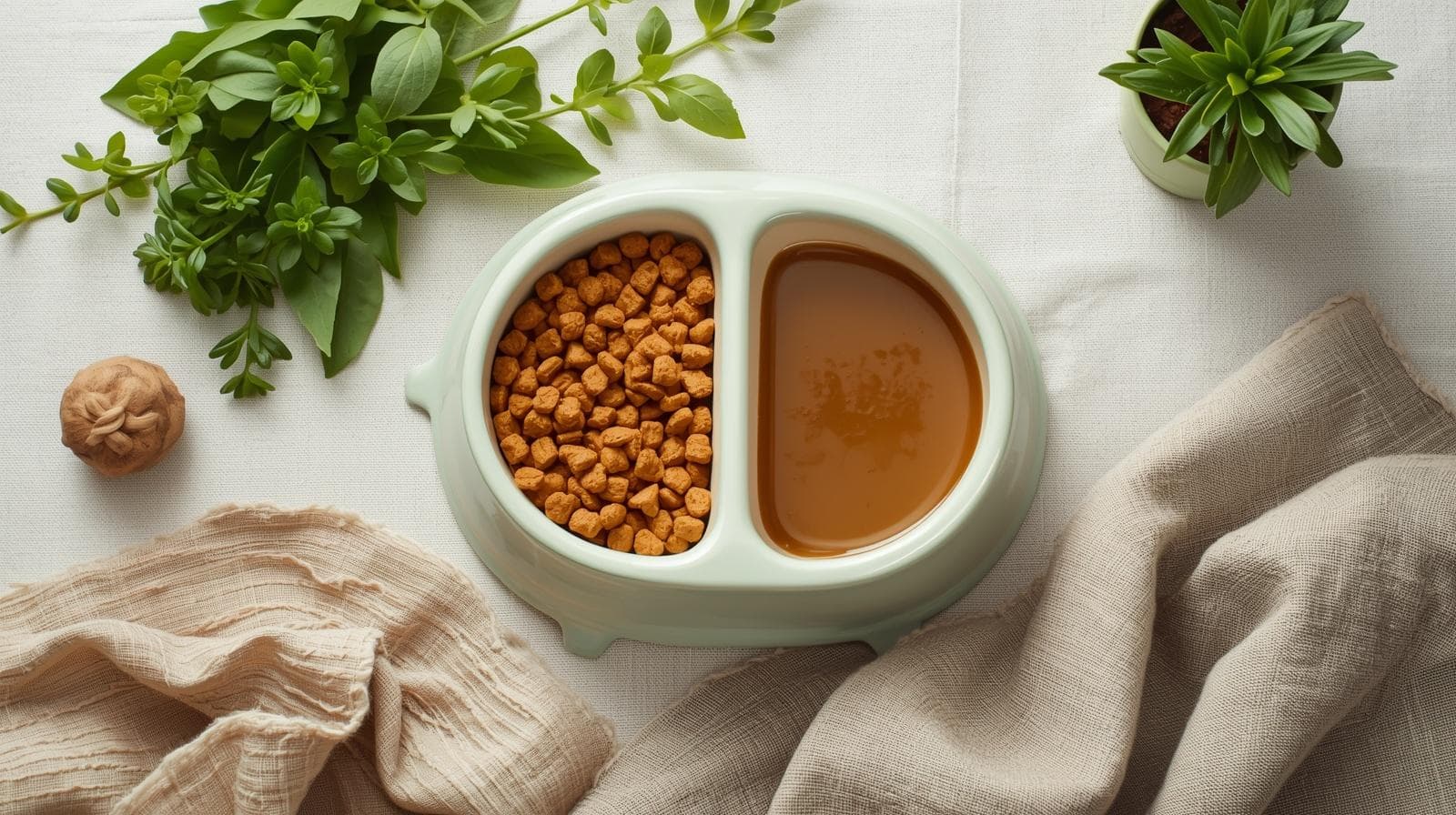
"Should I give kibble or canned food?" I've heard this question so many times I could write a whole book about it. And the answer isn't as simple as it might seem. Let's look at the scientific facts — without myths and marketing slogans.
Why Hydration Is So Important for Cats
Cats evolved in dry desert environments and have a naturally low thirst drive. In the wild, they get most of their fluids from prey — the body of their catch contains about 70–75% water. This is crucial because modern dry food contains only about 6–10% moisture.
A comprehensive scoping review by Kosmal et al. (2026) (DOI: 10.1093/jas/skaf434) analyzed 32 publications and found that cats on dry diets have lower total water intake and higher urine specific gravity, suggesting a greater risk of lower urinary tract diseases including crystalluria and urolithiasis.
What Research Says About Wet Food
A study by Buckley et al. (2011) published in the British Journal of Nutrition (DOI: 10.1017/S0007114511001875) examined the impact of food moisture content on urinary parameters. Cats fed a diet with 73% moisture had significantly lower urine specific gravity and lower risk of calcium oxalate crystal formation compared to dry food.
Benefits of Wet Food
Higher water content — helps maintain healthy urinary tract
Higher protein content — closer to a cat's natural diet
Lower carbohydrate content — cats are obligate carnivores
Better palatability — great for picky eaters or senior cats
Lower caloric density — may help with weight management
Benefits of Dry Food
Convenience — lasts longer in the bowl without spoiling
Economy — usually cheaper per serving
Puzzle feeders — dry kibble works great in food puzzles for mental stimulation
Storage — easier to store
What About Dental Health?
One of the most widespread myths claims that dry food "cleans teeth." According to Tufts University School of Veterinary Medicine, this is not true — regular dry food shatters on biting and does not clean plaque. The only foods with proven dental benefits are special dental diets certified by the VOHC (Veterinary Oral Health Council).
So How Should You Feed Your Cat?
Based on current scientific evidence, I recommend a combined approach:
Make wet food the foundation — ensures adequate hydration
Use dry food as a supplement — for example, in puzzle feeders for mental stimulation
Monitor total caloric intake — obesity is a serious issue in cats
Choose food meeting AAFCO/FEDIAF standards — look for "complete and balanced" on the label
Always provide fresh clean water — preferably in a ceramic bowl or fountain
Your veterinarian can help you design the optimal diet based on your cat's age, weight, health status, and lifestyle. There's no one-size-fits-all solution — every cat is unique.
References
• Buckley CMF et al. (2011). Effect of dietary water intake on urinary output in cats. Br J Nutr, 106(S1):S128-30. DOI: 10.1017/S0007114511001875 • Kosmal PAL et al. (2026). Scoping review on water intake and hydration in cats. J Anim Sci, 104. DOI: 10.1093/jas/skaf434 • International Cat Care. Should I feed my cat wet or dry food? • Tufts University School of Veterinary Medicine — Dental health in cats.